Love
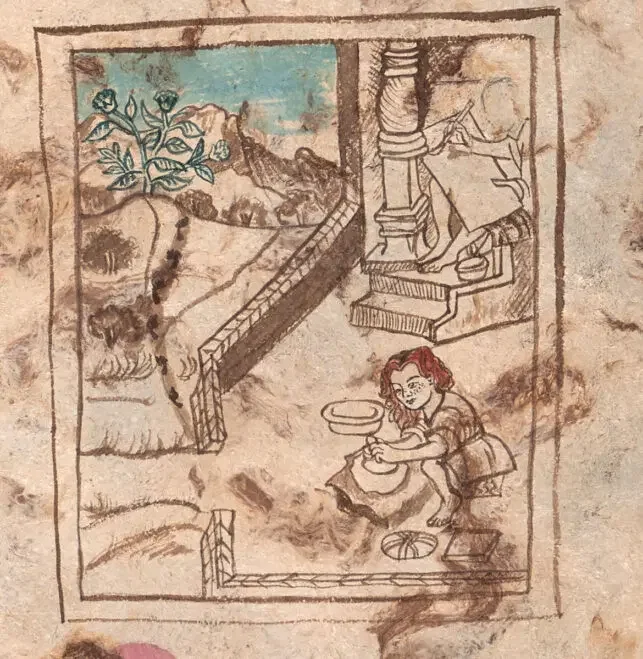
Sandy Rodriguez, “Processing Quiltic,” detail from Mapa de la Región Fronteriza de Alta y Baja Califas, 2017.
The first time I read bell hooks, I was gobsmacked.
It was an essay about art and love. I remember feeling startled, as if someone had named a longing I’d been carrying. She was writing about love not as sentiment or romance, but as an ethic. A choice. A practice rooted in care, commitment, responsibility, respect, and knowledge.
Love, she argued, was something you do.
That idea stayed with me. So when I read Teaching to Transgress, I felt as if she were showing me what that ethic might look like in motion. Not in romance, not in theory, but in a room full of students.
I was teaching then, trying very hard to be taken seriously. Trying to be an authority in a body that did not always feel authoritative. It wasn’t working. I was rigid. My students were polite. The room felt small. At some point, I stopped asking how to control the classroom and started asking how I could simply bring love.
The shift was almost immediate. I asked different questions. I paid attention to who was quiet. I tried to make space instead of taking it. Learning became relational. It required presence and risk. It asked something of everyone in the room, including me.
That shift found its fullest expression in a small seminar I taught on Jewish women writers. We were reading works by immigrant writers from the early twentieth century. My students were hungry. They wanted more than close readings. They wanted context. Texture. Proximity.
If I were honest, so did I.
So I started knocking on doors. I pieced together enough funding to rent a university van. We drove from Ohio to Brooklyn and slept on the floor of my best friend’s apartment.
I remember watching my students on the ferry to Ellis Island, laughing into the wind, pointing at the skyline. Their excitement felt electric and connected. At the Lower East Side Tenement Museum, we walked the streets where those writers had once lived. We stood on Orchard Street, where my own grandparents had begun their lives in this country. The classroom expanded. It was no longer contained by walls or a syllabus. It held my students, their curiosity, my family history, and the city itself.
That trip brought the ethic into the open. Not because it was sentimental, but because it required effort. Because it required trust. Because it said your learning matters enough for me to rearrange things.
Since then, my life has taken turns I could not have predicted. I finished my PhD. I moved across the country and led a humanities organization. I got married. I became a mother. I got divorced. I became a single mother. There were years when I felt unmoored. There are moments when I still do.
In those seasons, love was no longer about the classroom. It was quieter than that. It was about not hardening. About continuing to show up for my children. For my loved ones. For myself. About resisting the pull toward isolation.
hooks’ understanding of love stayed with me, but it began to feel less like transgression and more like belonging. Less about pushing against structures and more about finding my place inside the world as it is.
When I feel most alone, I find myself now turning to Mary Oliver’s poem Wild Geese. “Whoever you are, no matter how lonely,” she writes, “the world offers itself to your imagination…over and over announcing your place in the family of things.”
Your place in the family of things.
That line slays me. It brings both comfort and instruction. We belong. And also, we are responsible for belonging.
That’s how I understand the love ethic now, for what it’s worth. As the decision to stay connected. To drive the van. To listen carefully. To remain open. It is how I practice belonging when life feels uncertain. How I keep enlarging the room. How I keep announcing, quietly and imperfectly, that I am here.