Racism
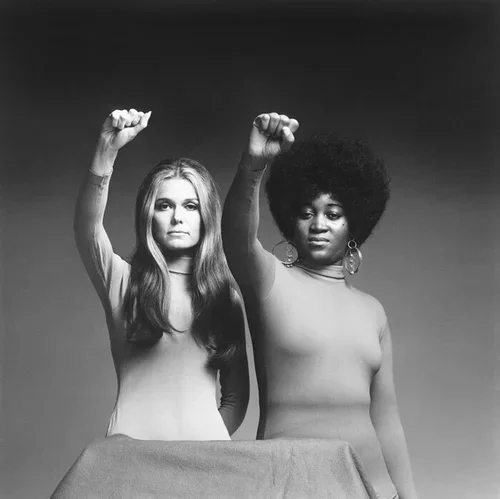
Gloria Steinem and Dorothy Pitman Hughes, 1971
This iconic image of the two founders of Ms. Magazine was taken by Dan Wynn in 1971 for Esquire Magazine and shows Steinem and Hughes sharing a large skirt, each with a raised fist salute to demonstrate feminist solidarity.
The photo was taken before intersectional feminism was named. Still, this picture always seemed hopeful to me. Aspirational.
What This Is. Why. And Who I Am.
This newsletter is about whiteness. Privilege. Responsibility. And language.
It’s animated by a belief that words matter. That they shape what we see, what we avoid, and what we’re willing to take responsibility for. I hope this space supports a deeper, more honest reckoning among white people regarding how and why Black lives have so often been rendered expendable in this country. And, maybe, it helps us imagine responses to racism that are more thoughtful, truthful, and humane.
I’ve been fortunate. I’ve had access to a strong education, generous teachers, and time to think. Over the years, that access has given me a particular lens on the history and persistence of racism in the United States—how it adapts, how it hides, and how it endures.
My doctoral work focused on Blackness, Jewishness, and gender in the public sphere, and included sustained engagement with first-person Black voices across centuries: from Phillis Wheatley in the 18th century, to 19th-century slave narratives, to letters, memoirs, songs, and organizing documents from the 20th century. That work was grounded not just in texts, but in the lived, documented experiences of people navigating racial hierarchy in real time.
I don’t share this to claim authority. I share it to be transparent about where I’m speaking from and to say that I hope this work can, in some small way, ease the burden Black Americans so often carry of explaining racism to white people.
Words
“I am not a racist.”
“I am anti-racist.”
The first statement is defensive. It often appears when someone feels accused and wants to assert their moral standing. But that reflex can reveal something else: a desire to preserve innocence rather than understand impact. It centers the speaker’s self-image rather than naming the experience. That posture doesn’t leave much room for learning.
The second statement is different. For white people especially, claiming an anti-racist practice means committing to listening, naming privilege, and confronting bias (including the unconscious kind). It suggests movement, not arrival. At that point, the question isn’t whether we can say I’m not a racist, but whether we’re willing to oppose racism in the ways it actually shows up.
In that spirit, I’m sharing the New York Times Anti-Racist Reading List. I haven’t read everything on it yet, but I plan to work through it over the coming months—and to think alongside others as I do.