Police
Police | No. 3 (2020)
In 2017, I read The New Jim Crow. It wasn’t an easy book to sit with, but it changed how I understood the country I live in.
One fact in particular has stayed with me. During apartheid, a higher percentage of US Black men were incarcerated in the United States than in South Africa. That fact rearranged something in me. And it has shaped how I listen, especially in conversations with other white people. I’ve heard neighbors and people I love say things like this:
“I think they’re really not giving us enough credit. Lots of white people marched in the Civil Rights Movement.”
“There are more white people in jail than there are Black people.”
“Policing in the United States is rooted in the desire to protect all people.”
“People in Black neighborhoods asked Mayor Michael Bloomberg to implement stop-and-frisk. There was so much Black-on-Black violence that they couldn’t take it.”
There’s a desire underneath those sentences to not be the villain, to not be the problem. And I heard echoes of this sentiment last Sunday, in a The New York Times op ed citing a recent poll in which 40 percent of white respondents said they believe discrimination against white people is a bigger problem than discrimination against other racial groups.
It’s a real feeling. And it isn’t supported by history or data.
Policing in the United States
The more I read about the origins of modern American policing, the less neutral it looks. Scholars trace its beginnings to slave patrols, the first of which were formally organized in the Carolina colonies in 1704. These patrols served three primary purposes:
to track down and return enslaved people who attempted to escape
to terrorize enslaved communities and deter revolt
to enforce discipline outside any legal framework
After the Civil War, these vigilante-style organizations evolved into Southern police departments tasked largely with controlling newly freed Black laborers and enforcing Jim Crow laws designed to strip them of political and civil rights.
In Northern cities, municipal police departments expanded in response to labor unrest. In the late nineteenth century, as union organizing intensified, police were routinely deployed to break strikes—often through violent dispersal of workers and mass arrests for “public order” offenses.
It’s hard to look at that history and still believe policing was built purely around public safety. From slave patrols to strike-breaking, from immigration enforcement to the ongoing surveillance and killing of Black people, policing in the United States has been entangled with race, labor, and hierarchy.
For a fuller historical account, see Dr. Gary Potter’s The History of Policing in the United States.
Stop-and-Frisk
In 1968, the Supreme Court ruled that police could stop and frisk individuals based on “reasonable suspicion.” (That ruling was later found unconstitutional, and the practice was formally curtailed in 2016.)
After taking office in 2002, Mayor Bloomberg dramatically expanded stop-and-frisk in New York City. The number of stops increased sevenfold, peaking at 685,724 in 2011. Over the course of his three terms, the NYPD recorded more than five million stops.
By 2017, roughly 90 percent of those stopped were Black or Latinx youth between the ages of 14 and 24. About 70 percent of those stops resulted in no finding of wrongdoing.
I’ve often heard it said that Black communities asked for this policy. When I went looking, I couldn’t find evidence of that
As Jenn Rolnick-Borchetta of the Bronx Defenders explained:
“The temperature in the city at the time was that the police were at war with Black and brown people on the streets. And that is how people experienced it.”
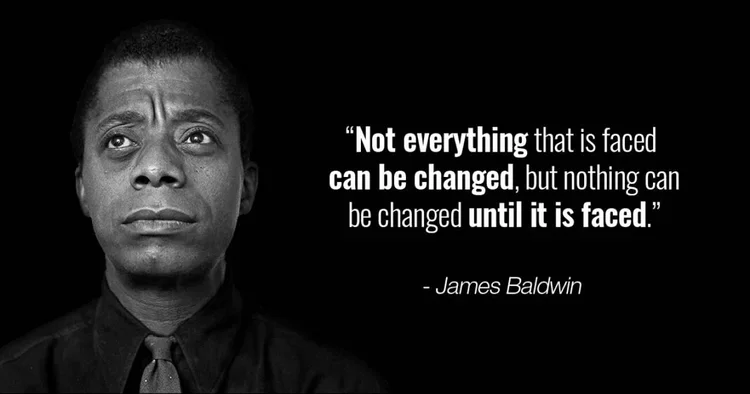
If there’s a throughline here, it’s this: beliefs don’t arise in a vacuum. They are shaped by stories we inherit, repeat, and protect. Examining those stories (especially the ones that flatter us) is not about blame. It’s about responsibility.
Read more at the New York Times “How Stop-and-Frisk Inflamed Black and Hispanic Neighborhoods”
Bye for now.
So. Much Love.
Cara